
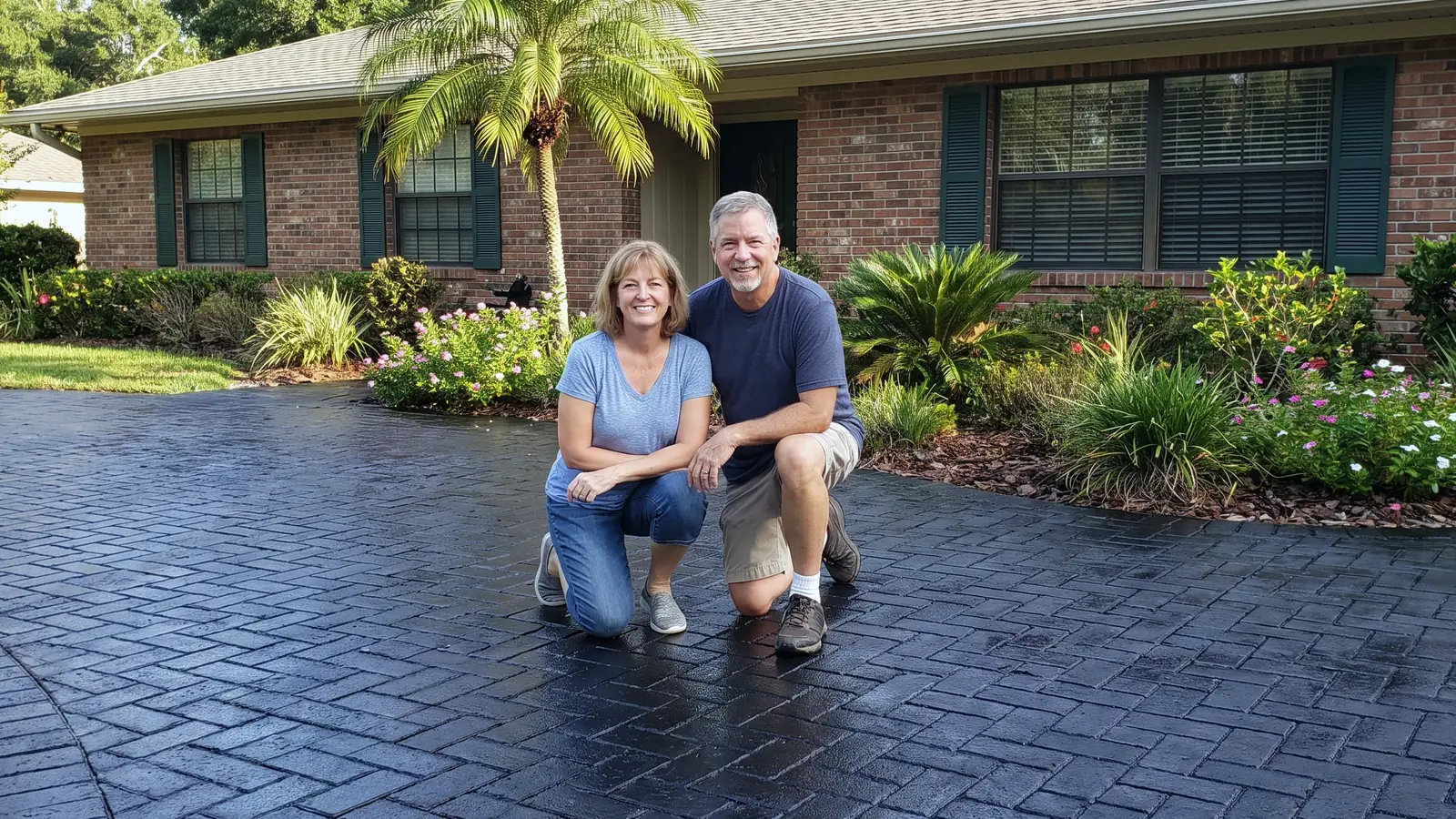
Paver sealing for Dunedin homes
Paver Sealing in Dunedin, FL
From Edgewater Drive to Main Street, Dunedin pavers face salt and storms, so call (656) 254-5347 for a free sealing estimate.
- Brings out deeper paver color
- Fresh joint sand helps lock pavers in place
- Gives weeds less room to grow
- Makes the surface easier to keep clean
- Free estimate, no obligation
Request a Free Estimate
Free, no obligation.
Fast, careful paver sealing in Dunedin
Paver sealing in Dunedin comes with a free estimate and a quick answer. Send a request, and a local contractor replies within 1 business day, usually much sooner, to look at your driveway, lanai or pool deck. To begin, send the short estimate form.
Salt haze on the walk, a faded lanai, weeds in the seams: that is the usual list by the water. A wash, new sand and a fresh coat turn it around in a day or two. Call (656) 254-5347 if you would rather talk than type.
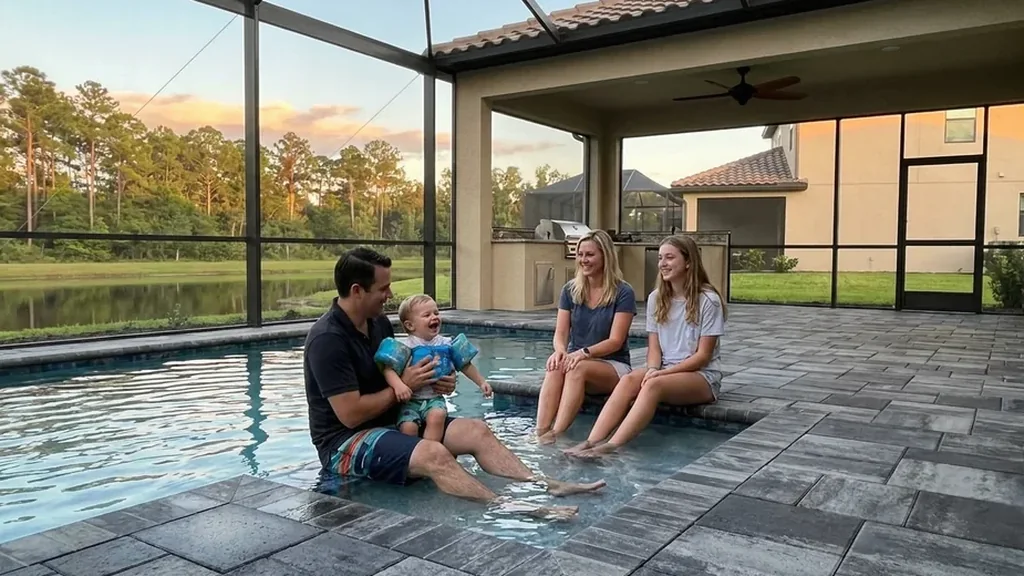
Why hire a local paver sealing contractor in Dunedin?
Water touches three sides of many Dunedin lots, which means salt, sun and storms all reach the paving. A local contractor plans for each, so send the short estimate form and ask how.
Salt-aware washing
Waterfront lots get a careful rinse, so sealer never locks salt against the stone.
Free walk-around
Someone local looks over your Dunedin paving and gives you a figure, with no fee.
Two looks
Matte stays natural beside Gulf-coast plants. Wet look brings deeper color but scuffs sooner.
No lock-in
Ask for an estimate and decide later. Answers come within 1 business day.
Get Your Free Estimate in Dunedin
Tell us about your pavers in Dunedin.
Free, no obligation
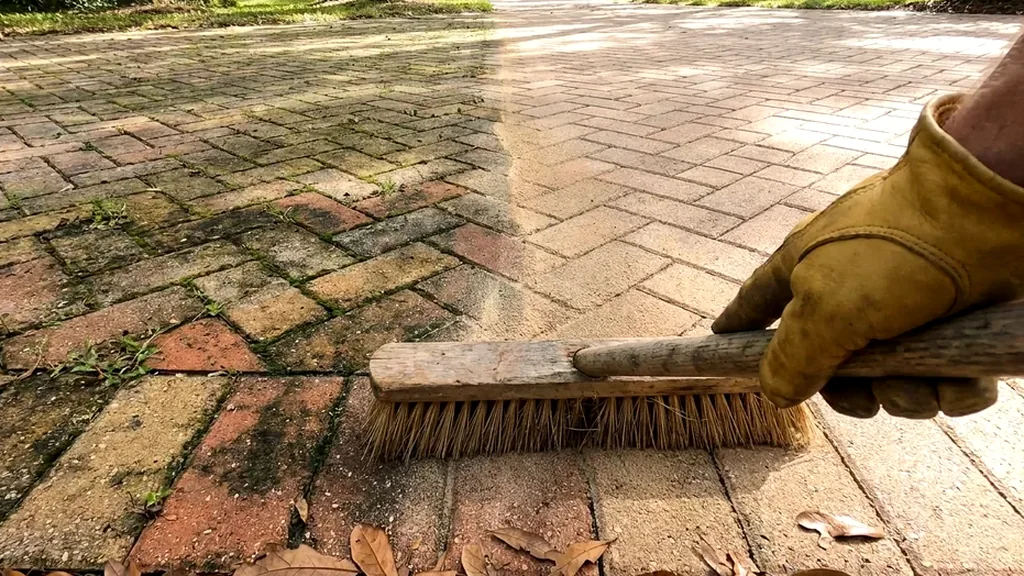
What paver problems show up most in Dunedin?
Salt and wind from the Sound
Water covers 63.2 percent of Dunedin's area, and a Dunedin paver company says salt spray from the Intracoastal Waterway wears unsealed pavers. Salt does not need a storm to do its work. Over time it can leave pavers dull and rough. A sealed surface sheds more of it, and a rinse after the wash keeps old salt from being trapped under the coat. Homeowners near the Sound often notice the film first on railings, garage doors and the sides of the driveway. If you see that dull haze, mention it when you talk to the contractor. It helps them plan the rinse. Railings, garage doors and the edges of a driveway show that haze first. If you see it, mention it when you call, because it tells the contractor how much rinsing to plan. A sealed surface sheds more salt than bare stone does. With 17.8 of its 28.2 square miles under water, Dunedin has more shoreline than most towns its size, and a mile of Edgewater Drive has open views of St. Joseph Sound. Open views mean open exposure. Sea air reaches driveways and lanais that a row of buildings would otherwise shelter. If you can see the water from your pavers, plan on the careful rinse. A rinse after sea air is simple to describe but easy to skip. Ask the contractor how the rinse will be done on your lot, and whether it covers the sides of the drive as well as the middle. Salt left along the edges is where coats fail first.
Green growth near the preserve
Hammock Park is a 90-acre wooded preserve, and the streets around it have plenty of shade. Landscape Ontario notes that moss and algae show up on pavers where the area is heavily shaded. A walkway that never gets full sun can turn green in the wet months. That film must be washed away first, since sealer would only lock it in place. Pavers that stay damp and shaded are the hardest to keep clean, so a coat of sealer helps most there. After the wash you may see the true paver color return, and that gives you a good idea of the finish you want. The Pinellas Trail runs right through town, and its side streets collect leaves and grit that also hold moisture. A swept surface between jobs helps the joints last. The 90-acre preserve is a reminder of how much green sits between the houses. Shade is the other half of the story. Streets near Hammock Park and along the Pinellas Trail have mature trees, and pavers there stay damp. Algae moves in where the sun does not reach. The wash takes longer, and a coat can help the next cleaning go faster. The Pinellas Trail follows an old railroad bed, and Dunedin's depot sat on that line until 1987, when the Atlantic Coast Line made its last run to Tarpon Springs. Homes near the trail are close to where those trains ran, and side streets there collect leaves and grit.
Sand that leaves with the rain
Tampa Bay's rainy season runs from late May to early October, with storms on most afternoons. Hard rain moves sand out of paver joints, and open joints let weeds and ants in. Refilling the joints after a wash is a normal part of the job. It also helps the pavers stay locked together, which keeps edges level. Pavers near the Pinellas Trail side streets often carry leaves and grit that also hold moisture. A swept surface after each season helps the joints last between coats. Dunedin's housing count was 21,905 units in 2020, and many of those lots are small, so storm runoff has little room to go. Water that rushes across a driveway takes sand with it. Refilled joints, and a coat to help hold them, are the usual cure. Storm rain in a town this low and this wet moves sand quickly. Landscape Ontario says lost joint sand is what lets weeds in. After a wash, new sand and a coat close the door again. Check the seams along the driveway edge, since that is where the loss shows first. Hard rain here comes in short bursts, and the apron of a driveway near the curb is where the runoff leaves. Sand piled along the gutter after a storm is joint sand that used to sit between your stones. A broom and a new coat are the cure, in that order.
Coats that wear out sooner by the water
A Dunedin paver company says that in coastal Pinellas climates, cleaning and sealing every two to three years keeps pavers protected. Other companies quote two to five years between coats. Where you land depends on sun, salt and traffic. A driveway facing the water may sit near the short end of that span. Ask the contractor what they see on your pavers before you pick a schedule. A written note of the date and the product helps you plan the next coat. Neighbors with similar pavers can end up on different schedules. The one nearest the water may need a new coat a year or two sooner than one a few blocks in. A look at the surface is a better guide than the calendar. Neighbors on the same street can need different timing. One home faces the Sound, another sits behind a hedge. A contractor who has worked this shoreline can read the difference at a glance. A date for the next coat is a good thing to ask for after the job. Honeymoon Island and Caladesi Island State Park sit just offshore, and the causeway to Honeymoon Island is a draw for walkers and cyclists. Visitors bring sand home on their shoes, and that grit scuffs stone. A matte finish hides it better than a wet look does.
Sun on lanais and pool decks
Summer highs in the Tampa Bay area average about 91 degrees, and a pool deck or lanai floor takes that heat every day. Sun fades color and leaves a chalky look. Pool decks add splash and sunscreen on top. After a good wash, a fresh coat gives the surface some protection and makes it easier to rinse clean. Pool water and sunscreen can leave a film, so rinsing the deck often helps between coats. The contractor can tell you what finish gives better grip near the pool. Dunedin's median age is 56.7, and 34.0 percent of residents are 65 or older, so many owners prefer a crew to do the heavy washing. A finish that is easy to rinse clean helps after that. Ask what product will be used so you can plan the next coat. Lanais and pool decks bring their own wear. Sunscreen, pool splash and bare feet leave marks that vary by surface. Brick, concrete and travertine each react a little differently. Tell the contractor which one you have, because that decides the cleaner and the finish. Pool decks in Dunedin get a double dose, with sun and splash from above and humid air from the Sound around them. A deck that gets a light rinse now and then lasts longer between coats. Ask the contractor about a gentle routine for the weeks after sealing.
Do waterfront streets in Dunedin need different paver care than streets near downtown?
Often, yes. Along Edgewater Drive and the causeway, lots face open water, so salt and wind reach the stone directly and a careful rinse matters more. Streets near downtown get less spray, though shade matters more. When you send the short estimate form, say whether your street is on the water or inland.
Dunedin is built around a walkable center. Main Street, the Pinellas Trail and the 1924 train depot at 349 Main Street sit close together, with the Fenway Hotel two blocks away and Hammock Park a short ride out. Homes nearby tend to sit on smaller lots with short driveways and tight turns, and gear may have to be carried in. Call (656) 254-5347 and describe your lot.
One Dunedin paver company names Curlew Landings, Fairway Estates, Spanish Pines and Golf View Estates among the areas it serves. Each has its own mix of lots, trees and distance to the water. Ask the contractor what they have seen in your part of town, since a street on the Sound and a street inland can age differently. You can send the short estimate form to start that talk.
What does paver sealing cost in Dunedin?
Rates here follow the Tampa Bay range of $1.50 to $2.50 a square foot, and your Dunedin quote is that rate times your paved area. Salt film, algae and thin joints push a job toward the high end. A wide lanai plus a long drive adds up quickly. For a figure for your stone, send the short estimate form.
Access shifts the hours, not the rate. A downtown lot with a short drive and tight turns needs hand-carried gear, while a long open drive goes quicker. Rust or thick algae adds wash time. Phone (656) 254-5347 and a contractor can sort out which applies to you.
| Paved area | Typical example | Clean, sand and seal |
|---|---|---|
| 300 sq ft | Small patio or walkway | $450 to $750 |
| 600 sq ft | Two car driveway | $900 to $1,500 |
| 1,000 sq ft | Large driveway or pool deck | $1,500 to $2,500 |
| 1,500 sq ft | Driveway plus pool deck | $2,250 to $3,750 |
Math based on the $1.50 to $2.50 per square foot that Tampa Bay paver companies publish. Your contractor sets the actual price after seeing the surface. Repairs, leveling and stripping failed sealer are usually extra.
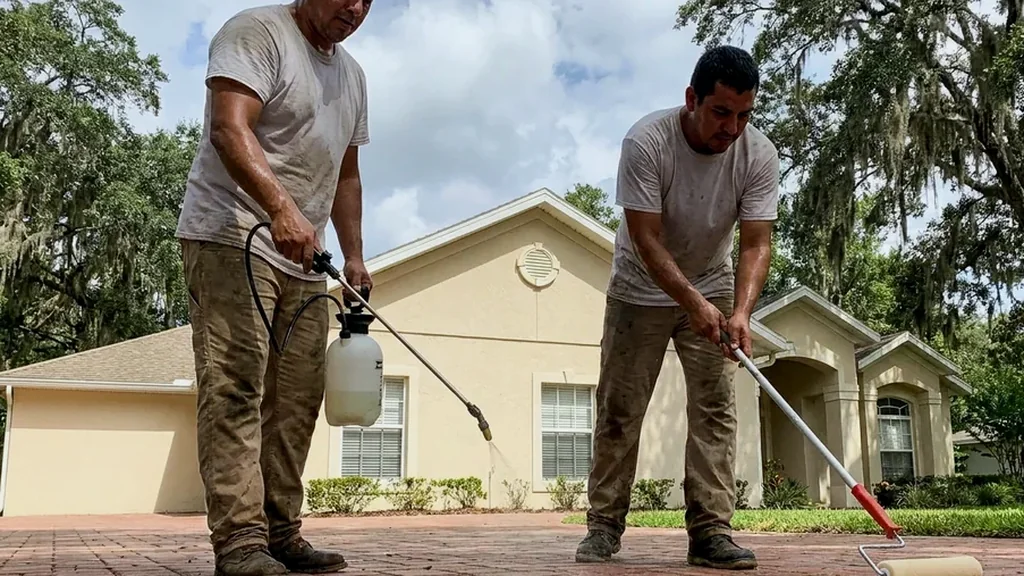
How does a paver sealing job work in Dunedin?
Survey the stone
The crew starts by studying your Dunedin paving: how near the water it sits, how much shade falls on it, and whether any stones have dropped. A question about past sealer follows, since water-based product cannot go over solvent-based. A small test spot settles it.
Rinse the salt away
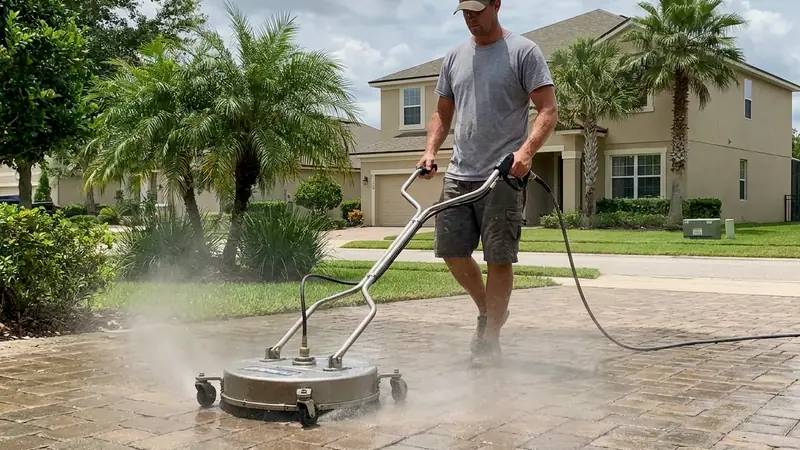
Washing lifts the gray film, algae and any salt left by the sound. Near the water, this step is slower on purpose, because sealer sitting on salt locks it in. Rust and oil spots are treated too, and rinse water is kept clear of plants.
Pack in new sand
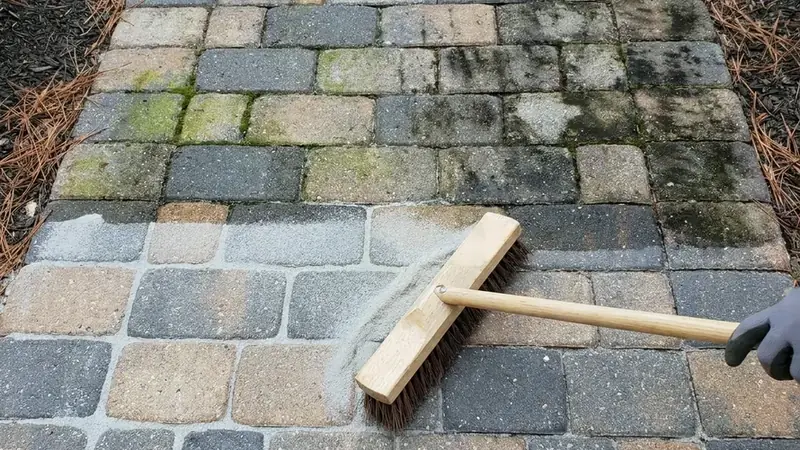
Joint sand leaves with the wash, so fresh sand is worked in before any coat. A tight joint resists weeds and holds the stones together. Brushing clears the top once the gaps are full. Driveways that lost a lot of sand may take a few passes.
Wait for dry stone
Sealer needs a dry surface, and summer storms can interrupt. A shaded patio near the trees dries slowest, an open drive quickest. The date moves if the sky turns. Dry weather peaks in November, Tampa Bay's driest month, so many owners book then.
Apply and set the wait
Sealer is sprayed on in your chosen finish, then checked for even coverage. One Dunedin company advises resealing every two to three years in coastal Pinellas climates, while quotes elsewhere run two to five.
Complete paver services in Dunedin
A Dunedin job has four parts: wash, sand, dry and seal. Doing them out of order traps salt or dirt beneath the coat. Call (656) 254-5347 to hear how long each part takes on your lot.
Salt, sun and splash each leave their mark. Driveways take tires, lanais take bare feet and pool decks take sunscreen. Brick, concrete and travertine age differently, so list yours when you send the short estimate form.
Finish and chemistry are separate choices. Matte or wet look is how it looks, and water-based or solvent-based is what it is, which a past coat may decide. Call (656) 254-5347 and describe what you know about your pavers.
Storms set the schedule from late May to early October. After that, drier weeks make sealing easier, and November is usually the driest month. A tree-shaded patio may need extra drying in any season. To pick a week, send the short estimate form.
Questions to ask before you hire
- Will my pavers get slick or hot underfoot once they are sealed?
- Is the sealer you use made for full Florida sun, and will it turn yellow over time?
- Salt air blows in off the bay. Does that change which sealer you pick?
- How long should I stay off the pavers, and how long before I can pressure wash them again?
- Will you seal the edges where the pavers meet my lawn and mulch beds?
- Who do I call if a spot looks blotchy a week after the job?
- Do you start early in the day to stay ahead of the afternoon heat and rain?
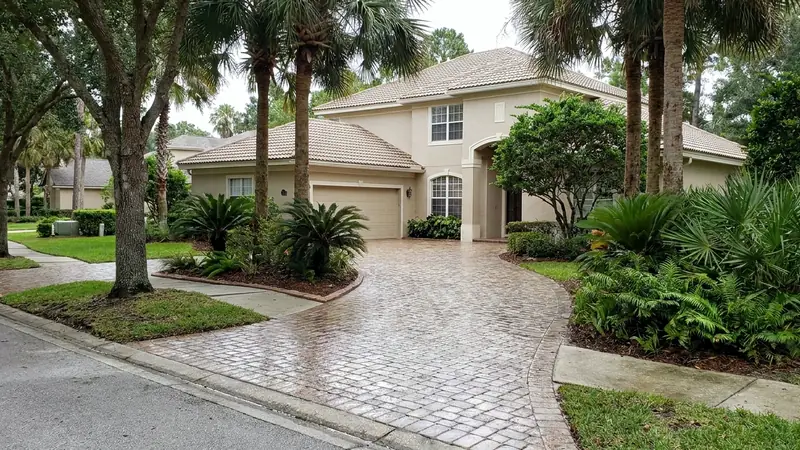
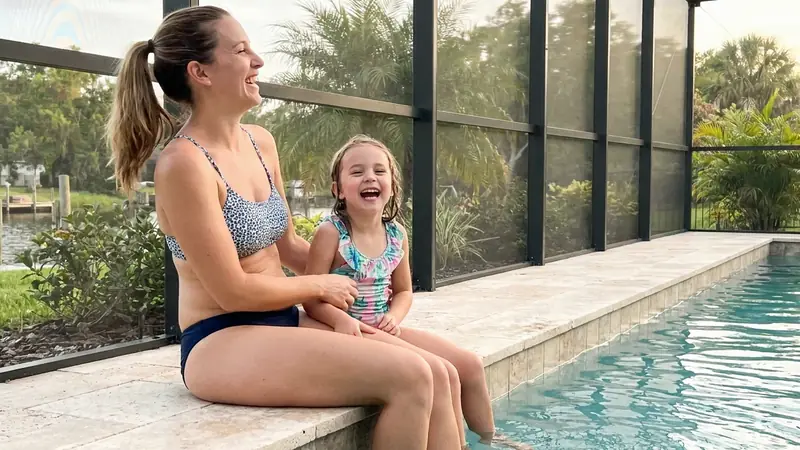
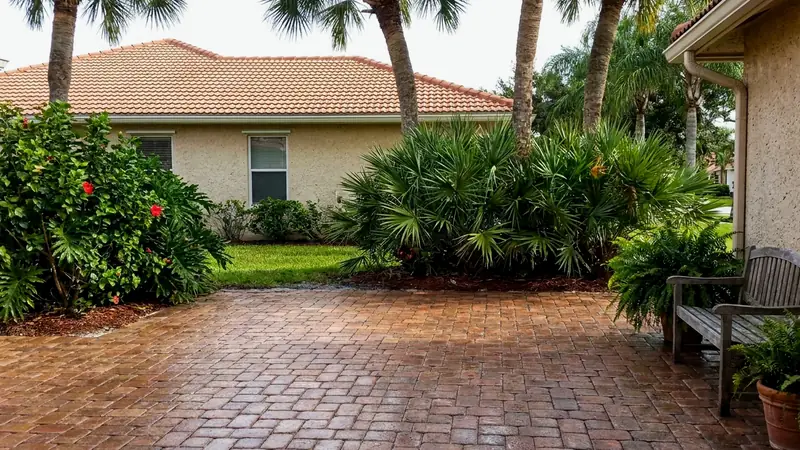
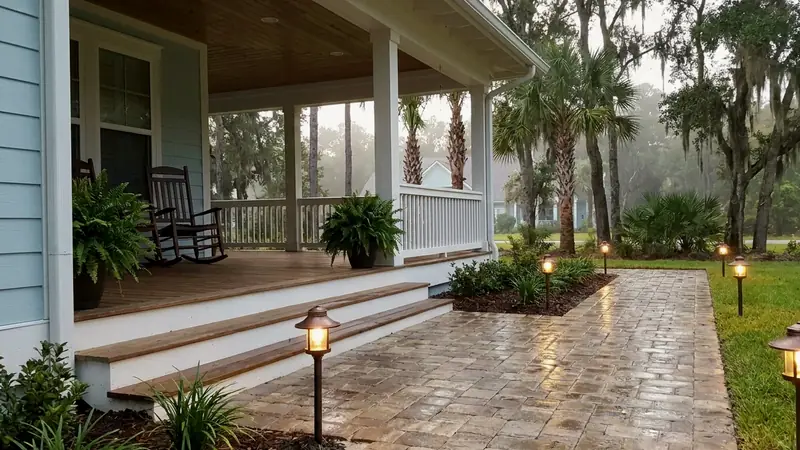
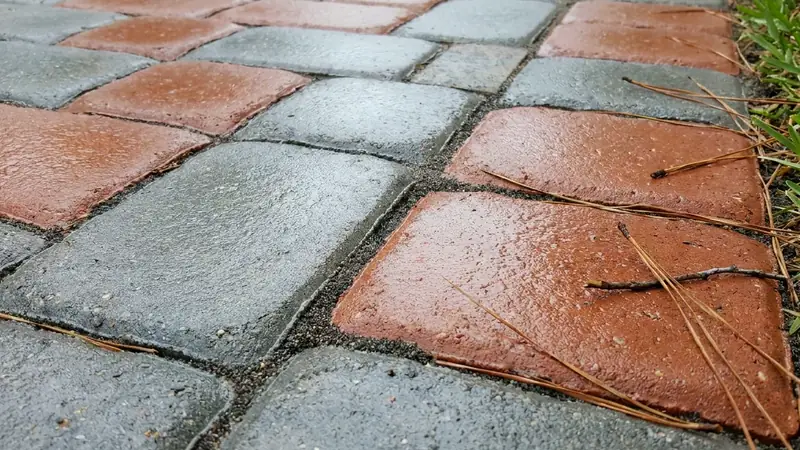
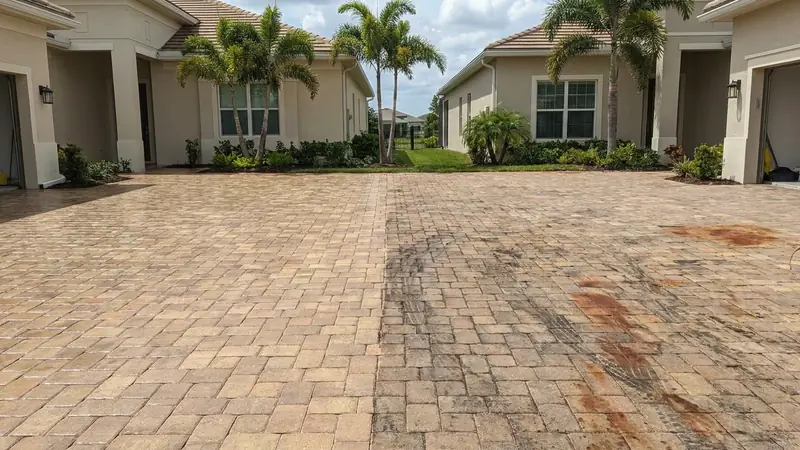
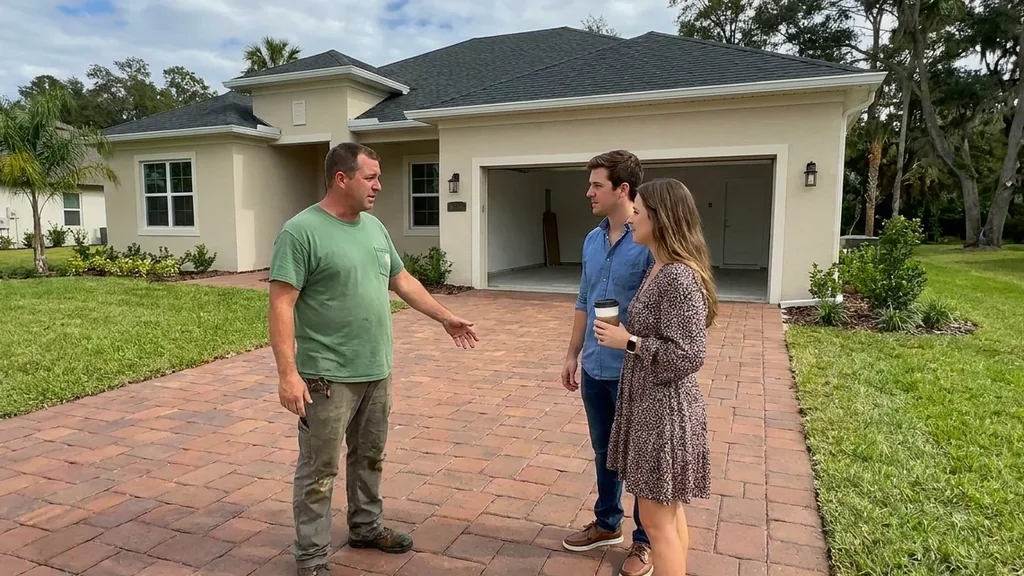
What do sealed pavers look like around Dunedin?
Why local matters in Dunedin
A crew that works Dunedin asks how close you are to the water and which way your stone faces. Those two answers set how much rinsing goes into the wash. They also flag whether past salt stains are hiding under old sealer. For a contractor who works this shoreline, call (656) 254-5347.
Downtown lots are tight, causeway lots are open, and trailside homes sit under big trees. Each needs a slightly different plan, and a local crew has seen all three. send the short estimate form and ask how yours would be handled.
Weather planning is part of local work. Afternoon storms are routine in Pinellas County, so mornings are favored, with a spare day held in reserve. That way sealer meets dry stone. Call (656) 254-5347 and ask how a Dunedin schedule is built around the rain.
What makes Dunedin different from other Pinellas towns?
Dunedin takes its name from Dun Eideann, the Scottish Gaelic name for Edinburgh, chosen by two Scotsmen who applied for the first post office. The town incorporated in 1899, partly over pigs running loose, and a livestock ban from that time still stands. During World War II a factory here built the Landing Vehicle Tracked, an amphibious vehicle for the Marines. If you live near Main Street, call (656) 254-5347.
Downtown holds the Dunedin History Museum in the 1924 train depot, which ran trains until 1987. Nearby you will find the Fenway Hotel, TD Ballpark, eight craft breweries and Hammock Park, while the causeway leads to Honeymoon Island and Caladesi Island State Park. That mix of water and old streets shapes every sealing job here. Near any of those places, you can send the short estimate form.
Frequently Asked Questions
How often should Dunedin pavers be sealed again?
Plan on every two to five years, going by company quotes. One Dunedin company recommends two to three years in coastal Pinellas climates.
How long does water-based paver sealer last?
Company quotes cluster around two to five years. The result depends on sun, salt, traffic and how clean the stone was at the start.
Which sealer works for outdoor pavers near the water?
Both water-based and solvent-based types are used, in matte or wet look. What is already on your stone decides which is safe, since water-based cannot go over solvent-based.
What is the average cost to seal pavers in Dunedin?
The Tampa Bay figure companies publish is $1.50 to $2.50 per square foot, covering the wash, the sand and the sealer. Your Dunedin figure is that rate times the paved area, adjusted for salt film, algae and thin joints.
What are the downsides of sealing pavers near the Gulf?
Money up front, a repeat coat every few years, and a surface that scuffs more readily in wet look. Rain can also push a date. A coat will not lift a sunken stone, so repairs are done first.
Is it worth it to seal pavers on a Dunedin waterfront lot?
Often, because salt air and storms wear unsealed stone and open its joints. A coat protects color and helps hold sand in place. The estimate is free, so you can weigh it against the price.
Does the crew work on Edgewater Drive and near Hammock Park?
Yes. A local contractor works across Dunedin, from Edgewater Drive and the causeway to the streets near downtown and Hammock Park. Share your street when you reach out.
How do I start, and how soon do I hear back in Dunedin?
Send a request, and a local contractor responds within 1 business day, usually much sooner, to book a visit. A price for the wash, sand and sealer follows. You can stop at any point.
Ready for a Free Estimate in Dunedin?
Call (656) 254-5347 and tell us about your pavers.
Free, no obligation